
You blocked off three hours to work on that big project. Then a meeting ran over, two “quick questions” turned into forty minutes, and by the time you sat down, the day was gone. Sound familiar? My guest today, Fran Hauser, says the problem isn’t your discipline. It’s that you’ve been taught to think about productivity in a way that guarantees you’ll never have enough of it.
You’ll discover:
About Fran Hauser
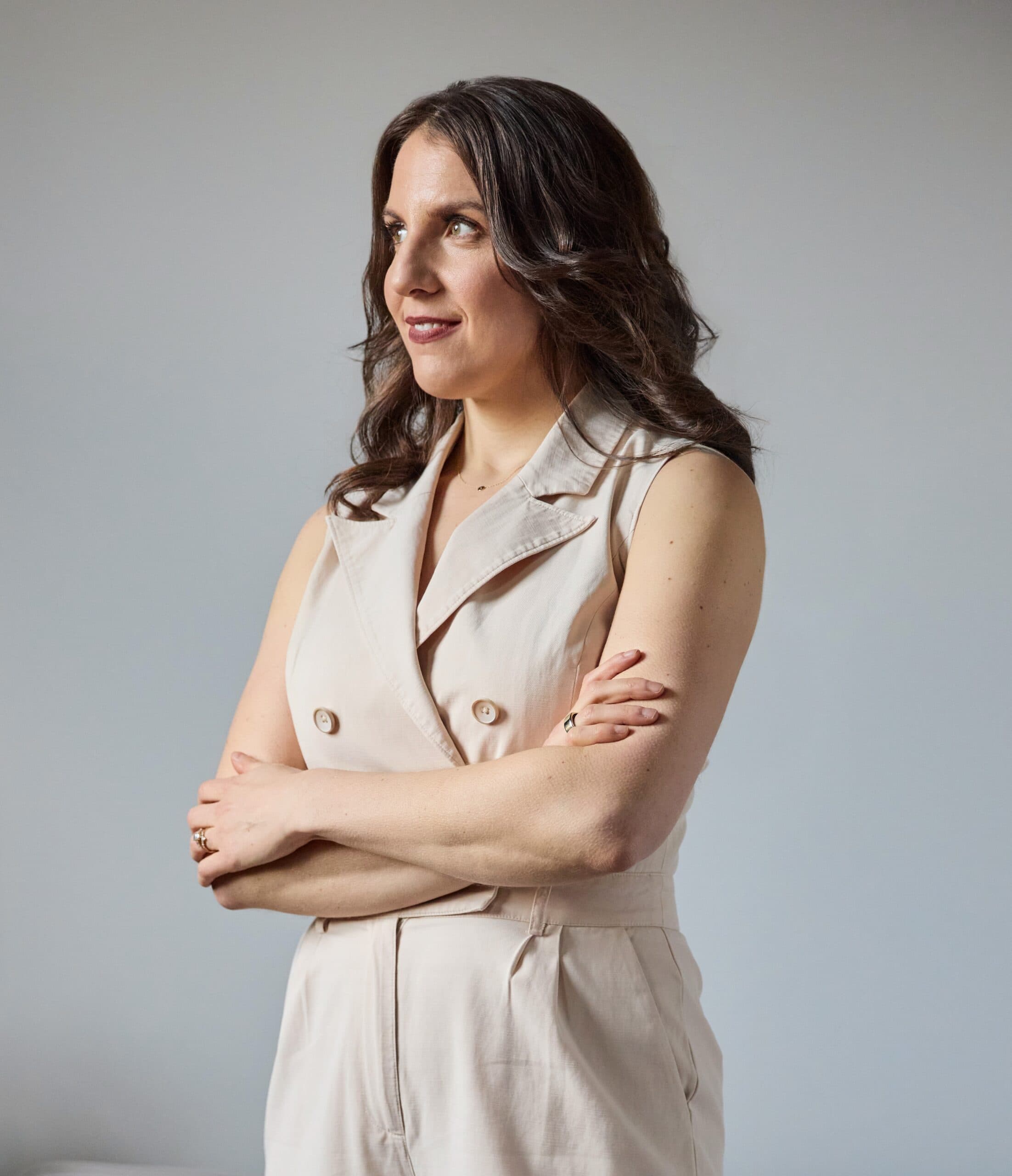
Fran Hauser is a leading career expert and vocal champion of women in the workplace, a former President of Digital at Time Inc., and a startup investor. She is also the owner of Bedford Books in Bedford, New York, and the acclaimed author of The Myth of the Nice Girl. Her forthcoming book, Twenty Minutes Is the New Hour, will be published by Penguin Random House/Crown Currency in September 2026. She has spoken at over 200 organizations, including Meta, Google, Unilever, BlackRock, Mastercard, and The Conference for Women. Fran’s insights have appeared in Fortune, CNBC, Fast Company, Elle, Refinery29, and Business Insider.
Melody Wilding: Today’s guest is someone whose work changed how I think about my own behavior and career, and I don’t say that lightly. Fran Hauser is the author of The Myth of the Nice Girl, and when I first read that book, it put language to something that I had been living without realizing. As someone who is a sensitive striver, which is around here what we call a person who identifies as deep thinking and feeling, but also puts a lot of pressure on themselves to succeed.
As a sensitive striver, I had spent years believing that being agreeable was the same as being a good person. And Fran drew a distinction that blew everything open for me, which is that nice and kind are two different things. Nice is saying yes to the meeting you dread because you can’t tolerate disappointing the organizer.
Nice is softening your feedback so much that the other person walks away with no idea what you meant Nice is absorbing the extra work in silence and then resenting everyone around you. Now, on the other hand, kind is telling a colleague how their presentation could have been even better next time because you want them to succeed. Kind is saying no clearly enough that people can plan around it and not guess if you’re in and out.
Kindness comes from combining backbone with integrity, and that reframe gave me, and has given Fran’s readers worldwide, permission to stop being the consummate pleasure to have in class, but just doing that in the workplace, and to start being more true to ourselves.
So when I saw Fran’s newest book, 20 Minutes Is The New Hour, I knew I had to have her on because it builds directly on this foundation. This book asks you to look at all of the places you are leaking time, whether that’s to worry, fear, other people’s priorities, low-value work that is just filling up your calendar but is not doing anything to move your life and career forward.
In this conversation, Fran shares two ancient concepts that totally changed how she works, and they connect to why everything we have been taught about productivity trains us to master the wrong one. She walks you through her Friday planning ritual, the one hour a week she says is her best time spent.
You’ll hear how to run a 20-minute meeting that gets more done than most hour-long ones, how to preemptively say no to your manager before they ever hand you a project, and the question to ask yourself the next time you catch yourself procrastinating. Fran is the author of multiple books. She is a startup investor, a bookstore owner, and most importantly, one of the warmest, wisest voices on women and work that I know.
So let’s get into it.
Fran, it is such a treat to have you here. I am so honored to talk about your new book. We’re gonna be talking about how 20 Minutes is the New Hour, which is quite a provocative phrase, and I think will speak to a lot of people who are listening. Now, where I want to start is you’ve written books before.
This is your third book, correct?
Fran Hauser: That’s correct
Melody Wilding: Yes. And so what made this… You know, how I first discovered you and came into your world, and I think a lot of people here will be familiar with your first book, Myth of the Nice Girl, which is calling a lot of us out in the best way possible. But now you’ve had this trajectory.
You also wrote, a book that was really about finding your career path and your passion and what your next step should be, and now you’ve written this book about m- somewhat managing and optimizing your time. So what was that trajectory of getting from nice girl to talking about career development to now this idea of 20 minutes being the new hour?
Fran Hauser: It’s such a great question. you know, when I think about The Myth of the Nice Girl, and my second book, Embrace the Work: Love Your Career, of the things that I really love about both of those books is that they gave me the opportunity to meet so many amazing women all around the country, and really hear their struggles. the topic that just kept coming up again and again and again, was this topic around time and not having enough of it. So, you know, not having time to invest in their careers, to build their networks, to advocate for themselves, you know, to do all of the things that we as career experts encourage them to do, right?
It’s like I wanna do all of those things, but where am I gonna, where am I gonna make the time? Where am I gonna find the time? it was sort of this, like, universal pain point that just kept coming up, and time is also something that I’ve struggled with over the years. You know, my relationship with it, um, it’s definitely been a little bit of a roller coaster, and I thought, “I really want this to be the topic of my next book.”
I think it’s a really important topic. Um, I think it’s something that can really women. Um, and so I was pretty clear that, like, okay, this is going to be the topic. And then, you know, 20 Minutes is the New Hour, um, I’ll, I’ll share just a little bit about how I came up with that title.
Melody: Yeah, please do
Fran Hauser: um, you’ll appreciate this, Melody.
I was working on the book proposal, and I was writing the summary for the chapter on meetings, which, you know, we all know meetings can be, like, the biggest time sucks. and I was sharing a story about how I shifted from one-hour meetings to 20-minute meetings. And in that moment I thought, “Wait, 20 minutes is the new hour.” it’s, it’s I really like the title because, it can be literal, meaning take an hour meeting, shorten it to 20 minutes,
Melody: Mm-hmm.
Fran Hauser: it’s really also a metaphor for really challenging assumptions around time and timelines. Like, does that project really need to be nine months? You know, can you get it done in a few months? You know, does the negotiation really need to take that long? can the meeting be an email or a phone call, right? the book, what I really hope for the book is that it gives readers to challenge accepted time- timelines, and to really be intentional about how they’re spending their time.
Like, intentionality is just a huge theme in the book
Melody: Yeah. And, and I love the concept because I think for so many of us it’s, it’s these pattern interrupts that just get us to think differently. It gets us off of that autopilot, which for us nice girls, and there’s plenty of those listening as well, we will always try to overachieve and please and do more than we’re physically able to.
And so there’s so much underlying that as well as, “Well, I have to do a really thorough job. I have to put aside three hours for this because that’s how I’m gonna get the best quality, and I, God forbid, I let people down or they’re disappointed in me.” And so I love this mental challenge of just even asking yourself, “All right.
For this project, for this meeting, for this negotiation, how could… What can I get done in 20 minutes that is a meaningful step forward?” It’s such a good mental reset from just the habit. So I, I know certainly I fall into, which is many times I have to do… So much of our jobs, Fran, is writing. You know that.
And I will tell myself the story of, “Ugh, I, I don’t have half a day to really get into this, so I’ll put it off for next week.” And then next week becomes the end of the month, and, and on and on and on,
Fran Hauser: Right.
Melody: right? Instead of, instead of just, I had to do this with myself this week. I’m working on creating curriculum for one of my programs, and I have just been, “Okay, I’ll get to that next week ’cause I don’t have a block of time now.”
And I said, “You know what? No. I’m just gonna start one lesson and get as far as I possibly can.” And I got pretty much 80% of the way there in about 20, 25 minutes, which was amazing. And I, I think that’s just such a good shakeup for those of us who are so rigidly attached. Yeah.
Fran Hauser: Absolutely. I love that story, and
Melody: Yeah
Fran Hauser: know, I think about that a lot with writing where it’s the same thing. It’s like, “Oh, I’m gonna need this, like, huge block of time.” But, you know, if I give it 20 minutes, maybe I just work on the outline. You know, maybe I just, like, write a paragraph. I just get, just get started because the thing is, when you take, like, one small step, it’s momentum.
You know? It’s just that… ‘Cause that’s what you wanna create is momentum versus just continuing to put it off and continuing to procrastinate. And I, I agree with you. We can get so much done in 20 minutes. You can actually create a lot of value
Melody: Yeah.
Fran Hauser: period of time
Melody: Yeah. It’s like, I think of those memes on social media that will say, you know, you procrastinated on a task for three weeks and then it took you 15 minutes to, to do. I, I think of that. That’s very true.
Fran Hauser: it’s the mental energy and,
Melody: Yeah.
Fran Hauser: space that it’s taking up, right? Because it’s still in your brain, you’re thinking about it. So over that three-week period, like, how much time have you spent thinking about it versus just starting?
Melody: Yes. So speaking of that, kind of the mental conception of time we have, there’s two concepts you talk about in the book that really in no other time management book I’ve read or product- productivity book I’ve read, I’ve never come across these topics, which are the Greek concepts of chronos and kairos when it, when it comes to our relationship to time.
So can you explain what those are, and particularly for those of us who are high achievers, who put a lot of pressure on ourselves, why are they even relevant that we’re, we’re talking about them or considering them?
Fran Hauser: Yeah. So very early on in my research for the book, I came across these two concepts, and I literally went down a rabbit hole because I, know, I feel like it’s like the student in me, you know? I, I just, um, I became, like, really curious, and I wanted to learn more. And, you know, basically what I learned is that chronos is what we’re the most familiar with.
It’s clock time. It’s hours. It’s our calendar. It’s the to-do list. It’s the doing of all of the things.
Kairos is more about the quality of the time. It’s, it’s about being present. It’s when our focus and creativity and energy all align. It’s like when you’re, when you’re feeling like you’re in that flow state, that’s kairos. And as high-achieving, successful women, think we’ve really been to believe success comes from mastering chronos, it’s all about output. It’s all about how much can we get done in a day. and so I really want to challenge that I believe there’s so much value that gets unlocked when we’re in kairos mode.
And, you know, I also had to do a lot of thinking about when I’m in … When I’m at work, like, whether I’m in the office or if I’m working from home, when am I most likely to be in kairos mode? And what I’ve realized was that usually when I’m immersed in a project that believe is really meaningful, a project that really matters, something that actually brings me joy, I actually enjoy working on it. I can be immersed in that for a few hours, like, heads down, and, and I’m so, like, in the flow. So that’s, like, one situation where I, where I’m in kairos.
The other situation where I’m in kairos, which is interesting, is when I’m not trying. It’s like when I’m for a walk, or maybe I’m having a coffee with a friend. Um, and, like, in those moments when I’m not trying I can also be really productive because, like, the best ideas come to me, you know? Or maybe I’m, like, stuck on making a decision, and all of a sudden there’s this unlock. So that’s- kairos for me is when I’m in, like, one of those two modes. And so the goal of the book, all of the tips and the techniques and the practices that are in the book, are really all about how can we free up time in chronos so that we can spend more time in kairos?
That’s really what I want for women who are reading this book. Like, I literally wanna free up pockets of time on their calendar that they can spend more time on the things that matter to them
Melody: Hmm.
Fran Hauser: Yeah
Melody: that. That is such an interesting concept too, because it, it strikes me that it is the old saying, it is about quality, not quantity. So even if you had 20 minutes in kairos, that can feel more satisfying and valuable to you than, than an hour plus just in that sort of chronos phase. Would it… Is that correct?
That’s more about the… Yeah. Yeah
Fran Hauser: Um, and you know, sometimes, I don’t know about you, but especially find this when I’m writing, like sometimes I just need a break. and I just will say, like, “Let me just like get up and like move around,” or just go like outside, like put my face in the sun, you know, even for like five minutes. Um, and it’s so important to do things like that, you know? And, and my concern, you know, with… I, I, whether it’s like my own calendar or if I’m mentoring, you know, someone, someone maybe who’s earlier on in their career or mid-career, what I w- I really feel uncomfortable seeing is a full calendar. Like, if I see a calendar that is literally like back to back to back to back to back, I mean, that’s a recipe for disaster as far as I’m concerned.
That’s like, that’s like you’re going right to bur- to burn out. I mean, I don’t know how you do that. And you know, even like this is such a small thing, Melody, but I, I really believe it’s like such a small practice, but it’s been so helpful to me building in transition time in between meetings, even if it’s like minutes, you know, where you can just like reset and just kind of like, you know, think about, “Okay, so h- come off of this one meeting.
Like what came out of it? What do I need to do?” Right? And then get yourself set up for the next meeting. If you’re just going like meeting to meeting to meeting to meeting to meeting, really… You might feel like you’re being productive, I bet you’re not
Melody: Hmm. Yeah, absolutely. You’re just, you’re just context switching constantly. And
Fran Hauser: Yep
Melody: and so I did wanna ask you, for you, have there been any other… And we’re, we’re gonna talk about, you know, how do you, how do you actually optimize your meetings and things like that, but I wanna hear for you personally, because you are, I, I mean, incredibly productive.
You run your own bookstore, you have, you’ve written these books, you have a family, you have a vibrant speaking career. Like, you do so many things, so you have mastered this at a level that most people really admire. So for you, what other tricks of the trade have really worked to keep you in that kairos space?
Fran Hauser: Yeah, I’ll tell you a, a big thing for me is how I start my day is
you know, I intentionally wake up an hour before kids do because I know if I’m, like, waking up at the same time as them, So it’s so much better for me to wake up an hour earlier. I have my routine, you know, I make my coffee. Even, like, this is such a simple thing, but, um, about a year ago my husband and I started using a French press, instead of, like, a a Keurig. I mean, the coffee is so much better, but it’s also, like, the ritual of actually, like, making the coffee, which is just, like, such a nice way to start the day.
Like, I don’t look at my phone, know, until I’ve probably been up for about, I don’t know, maybe a half an hour or so. so that’s really important to me. It’s, like, making the coffee. Like, unloading the dishwasher. looking at, like, okay, you know, just kind of thinking about, like, my day. Like, what are a couple of things that I really wanna make sure that, that I prioritize?
Or it might even be just, like, checking in on a loved one or, you know, my mom
Melody: Mm-hmm.
Fran Hauser: so that’s, like, a good… Like, I, I really need that time in the morning because once I go into the phone or then, like, once the kids get up, it’s just a whole other, you know,
Melody: Mm-hmm.
Fran Hauser: sensory thing. I don’t even know how to describe it. But, but so I… So the, the morning is really important to me. and the other, like, the other big thing, and this is something that I’ve been doing for a long time, and it’s actually the last chapter in the book, it’s my favorite chapter, which is the week-ahead planning that I do. So it’s, like, every Friday it’s looking at my calendar really making sure that I’m optimizing it.
So, you know, I know that for me, like, I am the most alert in the morning, so I wanna make sure that that’s when I’m doing my writing or I’m doing any kind of, like, strategic analysis. My creative time usually comes later morning, so that’s when I’ll set up, like, which is interesting. Like, that’s when I set up more, like, meetings around, like, social media, content creation. Um, and then I know that I need restorative time around, like, 3:00. So it’s even just, like, knowing, like, that those three, very, like, sacred to me. and then everything else kind of fills in around them. but it’s, like, looking at every meeting and saying, “Do I really need to be in that meeting? the meeting need to be that long?” You know? my whole goal is, like, how can I free up time on my calendar? Do I… I’ve accepted these three event requests, you know? Do I really want to go to all three? You know, is there maybe for one of them, like, you know, I really wanna support my friend, but maybe I just pop in in the beginning and give her a hug.
Melody: Mm-hmm.
Fran Hauser: You know, make sure I get home for dinner with the kids. it’s really like analyzing, and this I actually, it’s like the one thing I do spend probably a good 45 minutes to an hour on every Friday. It’s the best time spent where I just really make sure that like my calendar is aligned with my priorities.
If there’s stuff on there that’s like on my to don’t list, I’m like, “Why is it on there?” You know? So I, I’m, I’m really like analyzing and just trying to free up time on my
Melody: Yeah. Yeah
Fran Hauser: right? It goes back to like freeing up time for those kairos moments
Melody: Yeah. And, and I think this is so brilliant because I, I directly relate to, oh gosh, I said yes to three events this week, and now the week is here. You know, there’s… I, I forget what it’s called in psychology, but there is this kind of effect where we’re always more optimistic about what our future self wants to and can accomplish, and then once it rolls around, we’re like, “Oh no.
I really overbooked myself,” or, “I actually don’t wanna do this.” So I love that you give yourself that more immediate, evaluation point where you can say, “Okay, I did commit to this, but is it still, does it still match my priorities?” And the courage it takes to then make an adjustment or say, “Hey, can we, meet for 30 minutes instead of 90?” Or, “I, I’m sorry, I, I can’t make it into the city.”
I actually wanna talk a little bit about that because you do talk a bunch about people pleasing in the book, and that being one of the biggest blockers we have to really being able to optimize our time and make it our own, keep it our own. And something you talk about in that chapter is preemptively saying no.
So talk to us about that. What might that look like, especially for someone who is in a work environment where they maybe don’t always feel like they have the power to say no? what would this look like?
Fran Hauser: Well, first of all, I, got this idea from my friend Gina Pell, I love it so much, this idea of preemptively saying no. And The story that she shared with me was that whenever she makes a donation, not, not all the time, but in certain cases, she makes a donation, um, and she will say, “Please consider this a one-time donation.” And I was like, “Huh, okay, that’s interesting.” so this idea of preemptively saying no, when I think about it in a work setting, I kind of think about, you know, what is, like, your… Knowing what your capacity is and how much you have on your plate, and being really open with your manager about that capacity.
Like, not waiting until they come to you and say, “Hey, I’ve got this other project for you,” or, “I have this other thing that I need you to work on.” But maybe in, like, a regular check-in with them, just letting them know, you know, and, and saying, “Hey, I just want you to know, like, I’m working on X, Y, and Z. I’m pretty much at so if something else does come up, I’d just love your help in thinking through what would get deprioritized, you know, in that, in that situation.” And I really love this because I know, like, earlier on in my career, like very early on in my career, I think I just assumed that my manager knew what my capacity was. you know, managers have a lot on their plates. They have a lot of people on their team, people that they’re leading. It’s impossible for them to know what every single person on their team’s capacity is. So just having an open conversation with them about your capacity, and bringing them in kind of as a partner in terms of managing that capacity, I think is sort of a delicate way of preemptively saying no,
Melody: Hmm.
Fran Hauser: sense.
Melody: Oh, it, 100%, and it shows your, not just your self-awareness, but your capacity management. I always say it is so much better to set expectations than it is to set a boundary, because an expectation is proactive, right? And as you were saying, it gives you a precedent to call back to. Just you, you’re saying upfront, “Hey, I’m almost at capacity.
I may need your help.” Then when you do need their help, you’ve almost gotten yourself past that emotional hurdle of like, “Oh, gosh, am I gonna look weak now? What are they going to think of me?” Because you’ve already had the conversation, so now it’s just a follow-up of, “Remember when I mentioned that? We’re there now, so I really would love your help making that decision.”
It becomes just a matter of course rather than this rigmarole that you put yourself through, which I think, yeah, which as women, we really put ourselves through the emotional wringer of like, “Should I even bring this up? Should I not?” And I, I love that idea of just bring people into it preemptively. It will save you so much later. Yeah, that’s great.
Let’s talk about, meetings. Because as you said, for most of the people listening, they spend a lot of their time in meetings, and you are an advocate for the 20-minute meeting. So Let’s start with how do you run an effective 20-minute meeting when you have the ability to be the leader or the facilitator?
Then I also wanna talk about when you’re not in that leadership role, ’cause that, that’s a different can of worms
Fran Hauser: Yeah. Yeah, I mean, so there’s actually, agendas in the book which I think are really great. Like, based on the type of meeting that you’re running, there’s some sample agendas that you can follow. But, you know, I think at a, at a high level, I, I think it’s really important to ask yourself a few questions.
Like, know, what’s the one decision that needs to be made this meeting, right? If there was one decision, what is that decision? who are the right people to be in the room? Because you know, Melody, like sometimes these meetings, it’s like 15 people show up. Anything beyond seven people, and it’s really not productive. so who really needs to be in the room? and then is there information that you can share ahead of time as opposed to waiting until the meeting? Because that sucks up so much time. I always say, like, if there’s like a Slack channel or a Microsoft Teams, channel where you’re basically just kind of dumping information, like stuff to read before we get into the meeting, I think that can be really, really helpful. But it’s, it’s having clarity around all three of those things. So what’s the decision, you know, that we’re making? Who needs to be in the room? And what’s the information that I can share before the meeting? The other thing that I would say is I really find it helpful to have a timekeeper, in the meeting, and that’s not the same person as the facilitator.
So it’s someone else that you ask ahead of time. you know, their job is really to make sure that you’re staying on track with the agenda so that when tangential topics come up, you know, they would be the person to say, “You know what? Let’s add that to the parking lot, and we’ll address that at a later point in time ’cause, you know, wanna make sure we get back and we, you know, we, we hit the different items on the agenda.” so having a timekeeper I think can also really be helpful. And, you know, the whole psychology, I know th- the psychology is an important part of
Melody: Mm-hmm
Fran Hauser: this podcast. there is something that is really comforting to people when they bring up a topic, as opposed to that topic just being dismissed. It’s really comforting to know that it’s going on a list, which is the parking lot. at some point, we will come back to this know? Like, it might be just included in the next steps, but we’re not, we’re not dismissing this. It’s just not on topic, but we will come back to it. So those are just a few, you know, a few, a few things to, to think about.
Melody: Yeah, that’s great. I, I love the pro tip about having the timekeeper because it allows you to be more present, and I think what, what I hear from a lot of clients who have to be the one in the position of leading the meeting is it is so many different modes to juggle. I’m looking at trying to let people into the Zoom room while I’m trying to manage the time while I’m trying to listen to the conversation and make connections.
And so having that, yes, as you were saying, almost that person can play bad cop a little bit if it’s like, “Okay, we’re coming up on our 15 minutes for this topic. Let’s switch gears,” or, “We’ll, we’ll put a pin in that for the parking lot for later.” They, they can do those things, but it allows you, like going back to the idea of quality, the quality of your contribution is so much better ’cause you can be in it instead of managing the logistics.
Yeah
Fran Hauser: Yeah, the logistics, I mean, it’s really hard to do both. You know, I always say it’s kind of like, you know, when you look at, talent and then, like, the production team, right? If you just, uh, just apply that to a meeting, right? It’s, it’s, it’s really hard to do both at, at the same time and to do it well. and look, the other thing about if you’re not leading the meeting, this, this is funny. This kind of goes back to, like, when I’m looking at the week ahead and I’m looking at meetings that I’ve been invited to. There are often times where I will reach out to the meeting owner ask them, “Can you just remind me, like, what is the purpose of this meeting again, and what is the best way for me to contribute?”
Because might be that the best way for me to contribute is to weigh in ahead of time you know, make an introduction or to provide information ahead of time. Or, like, do I actually need to be in the meeting, you know? It’s, it’s really important. Don’t, just take things as is, you know? It’s like question, because it’s time.
Melody: Mm-hmm. Yeah. A- and I, I think that’s, you know, it’s also in service of everyone there, not just you, right? It… And you never know, I think some, some of us may feel like, “Oh, is it my place to ask that?” But a- as an organizer, I appreciate when someone says, “What’s, what’s the one thing we’re trying to get out of this?”
‘Cause I’m like, “You know what? I don’t know that I’ve thought of that, and I probably should have.” So, uh, you can also be helping the organizer kinda sharpen their thinking and how they’re walking into it too, rather than having to feel like you’re being a burden or annoying by asking. Yeah
Fran Hauser: you know, and the other thing is don’t be afraid i- if the meeting starts and decision-maker is not there, like, just don’t be afraid to say, like, “You know what? Let’s just reschedule this.” I mean, that’s actually happened to me where we’re like, we’re on a Zoom and the person who we really need to make the ultimate call is not there, and everybody’s just, like, sitting there, like, looking at each other, like, “What should we do?” And it’s, you know, it’s totally fine. Like, get that time back
Melody: Mm-hmm. Yeah. Yes. Yeah, and again, if it’s in service to everyone, like, uh, this, this will be a better use of all of our time if so-and-so is here when we’re making this decision. So how about, how about we give you all 30 minutes back in your day? Anyone object to that? No. So I love that.
Melody Wilding: I do wanna talk about procrastination
Melody: a little bit because, those, those people listening, they are usually knee-deep in professional personal development.
They’ve heard the hacks on LinkedIn and all of the places about, like, here’s how to get over procrastination. But
Melody Wilding: what do you find really works for women in the real world with all of the things they’re juggling? What have you found to be most effective?
Fran Hauser: When I find myself procrastinating, I usually take a step back and think about, like, what am I afraid of? usually there’s fear. There’s, there’s something… Like, I have a story in the book about, how I was helping founders with their fundraising, and my role was really kind of inviting investor network to this Zoom where they were going to pitch the, the business. Um, but before we could do that, you know, they were working on the deck, on the pitch deck, but we had to figure out the financing vehicle. what I, what I realized was, like, I was really putting this off. Like, I knew that I had to, like… I had these deliverables for them before they could schedule the Zoom, and I just kept putting it off.
And I was like, “What? What am I afraid of?” And what I realized was that we had just come out of COVID, the financing landscape had changed a lot, and I hadn’t kept up, and what I needed was knowledge about what was going on with these different financing vehicles. And when I acknowledged that to myself, realized, okay, all I need to do is reach out to a friend who has kept up and grab a cup of coffee with her and just get myself back up to speed. once I did that, it became really clear to me what the financing vehicle should be, and we got the Zoom scheduled, we got the investors on the… You know, and it was fine, but it was like, in that moment, I’m like, “Why am I procrastinating on this?” You know? Like, “What is keeping me from doing this?” So I think asking yourself, “What am I afraid of?” is a really important question. If it’s… So that’s one path. The other might be y- you’re just not doing it because you just don’t want to. Like, you’re just like, it’s just something that you just really don’t wanna do. And in that case, I ask myself, like, “What’s the bare minimum that I can do right now?”
Like, just the bare minimum. Kind of going back to what we were talking about before, Melody. Like, how do I just start? Like, what’s one thing? Maybe it’s a phone call that I can make, or maybe it’s just writing the outline. And I think there’s, like, such a negative connotation around minimum. You know?
Like, I’ve heard my friends say, like, “My son is bare minimum. He just, like, does the bare minimum.” And you know. But when it comes to procrastination and getting yourself out of it, doing the bare minimum to start can actually be, like, really helpful. So those are two, I would say. Like, the what am I afraid of, and then thinking about, like, what…
So whatever that fear is, what’s, like, the first step that I can take to address it? In my case, it was let me reach out to somebody who knows, you know, who has the knowledge. Um, and then the other is, like, what is the bare minimum that I can do just to get started? Even if it’s messy, it’s
Melody: Mm-hmm. Yes. Yeah. And I, I love what you said. So many people don’t realize that procrastination is usually an emotional management problem, not a time management problem. You likely have the time, and you could fit it in, and you could time block, but it’s, as you were saying, it’s the activation energy. It’s the fear behind it.
It’s perfectionism that might be holding you back. And, um, it’s funny you mention the putting your finger on the next step being talking to someone. I was actually just having a conversation with a client earlier today about this who needs to do some next steps around longer term business planning, and what we landed on was that they, they were, they were kinda getting sucked into things that were urgent, like fires coming up in, in the business, and the important, more strategic things were falling by the wayside as they tend to do.
But what we… When we kind of investigated that further, it wasn’t just the lack of time. It was the, the vagueness around, “Okay, I know I need to, uh, think about our finances and our accounting and succession planning,” and it was, it was too vague and big. And so once we were able to narrow it down to, as you were saying, the next step is to reach out to this person, and that will reveal kind of like a flashlight on the ground, what do I do from here?
Because you can’t always… I, I think a lot of us too, and me included, get very attached to like, “I need to have my project plan in place. I need to know what the first step is and the second one and then exactly how I’m getting there,” instead of this almost trust of first step and the path will continue to reveal itself, which is so hard to kind of allow yourself to rest in that uncertainty around it.
Yeah, I don’t know if you have any reactions to that. Yeah.
Fran Hauser: know, it’s funny when you said, like, the, the project plan, because I am, like, the queen of Google Sheets. You know, I have these, like, Google Sheets that have, like, 15 tabs and, you know. And, the book launch is 15 tabs, right? Launching this book is 15 tabs. And so very often when I’m doing my week-ahead planning and I’m like, “Okay, so what part of the book launch do I wanna focus on this week?” I literally just take one tab, you know, and I’m just like, “Okay, what do… Maybe I can just make progress on this one tab.” Maybe, like, the tab is the book tour, and so maybe I’m just gonna focus on, like, okay, like do I want to… You know, Melody, you and I were talking about this earlier. Like, you know, where does it make sense?
Where are the watering holes? Where are the people, you know, that, that, that are gonna be reading this book, and how do I find them? And so let me just focus on that, you know. And I block out time on the calendar to focus on that one piece. It doesn’t have to be the whole thing.
Melody: Mm-hmm.
Fran Hauser: And very often it can’t be the whole thing. It can’t. I mean,
Melody: No
Fran Hauser: has that? I don’t have that capacity. I don’t know, right?
Melody: Exactly. Exactly. And, uh, what I find too is that when I try to plan too many steps, I end up having to redo things because things change, right? And so, and I’ve created more work
Fran Hauser: Me
Melody: for myself. If I just, if I just held my horses and just did the very next thing. I don’t know if that ever happens to you, but
Fran Hauser: this…
Melody: to me all the time.
Fran Hauser: about this much because sometimes I wanna get ahead of things I find myself in, like, planning mode, you know? And it’s like, so I, I do things, but then it’s like the day of and, and then I’m redoing it. You know? Versus just, like, sometimes, like, it actually just makes sense to, to wait.
Melody: Yeah
Fran Hauser: It’s almost like pre-crastinating. Do
Melody: Yeah
Fran Hauser: what I’m… Right? Like, sometimes it just makes sense. It’s like, okay, this thing is happening on this day. Like, that morning, it’s actually the best use of my time to just deal with it that morning as opposed to, like, trying to get ahead of it.
Melody: Yes
Fran Hauser: so agree. I really have to check myself on that because I’m such a planner.
Oh my goodness.
Melody: Oh. 100%. Yeah, my anxiety will be like, “What can I get ahead of? What can I get ahead of?” And I, I really have to talk myself back to say, “You’re gonna end up redoing this later ’cause so much can change and evolve, so just calm down.” So I think this is a good, uh, that is a great place to land it for everyone who…
There are so many people who need to hear this message and who need to get the book. So where is the best place to send them to connect with you and to get their copy?
Fran Hauser: So, um, my website is franhauser.com. and the URL for the book is twentyminutesbook.com. it’s available everywhere. You can order it from my bookstore, and I’ll sign it, and send it to you. But it’s, it’s literally everywhere. I’m also on Instagram and LinkedIn
Melody: Oh, fantastic. I was going to mention support local bookstores like yours, and so I love that. Yeah, you have the inside track, right? To, to, to mail out your books. That’s so cool.
Fran Hauser: saying
Melody: Oh, fantastic. Fran, thank you so much. it has been lovely to have you here, and I know this is really valuable for so many people, so thank you
Fran Hauser: thank you. I appreciate you and your work so much. Thank you for having me
You’ve got the brains (obviously). You’ve got skills (in spades). Now let’s get you the confidence and influence to match.
