
If you’re sick of being told “bring your whole self to work!” and having zero idea what that means, this episode is for you. Claude Silver, author of Be Yourself at Work, joins Melody to discuss how to discover who you want to be at work after years of being defined by comparison, what your options are when your current role doesn’t feel like a fit, and how to lead with emotional intelligence while driving accountability and results.
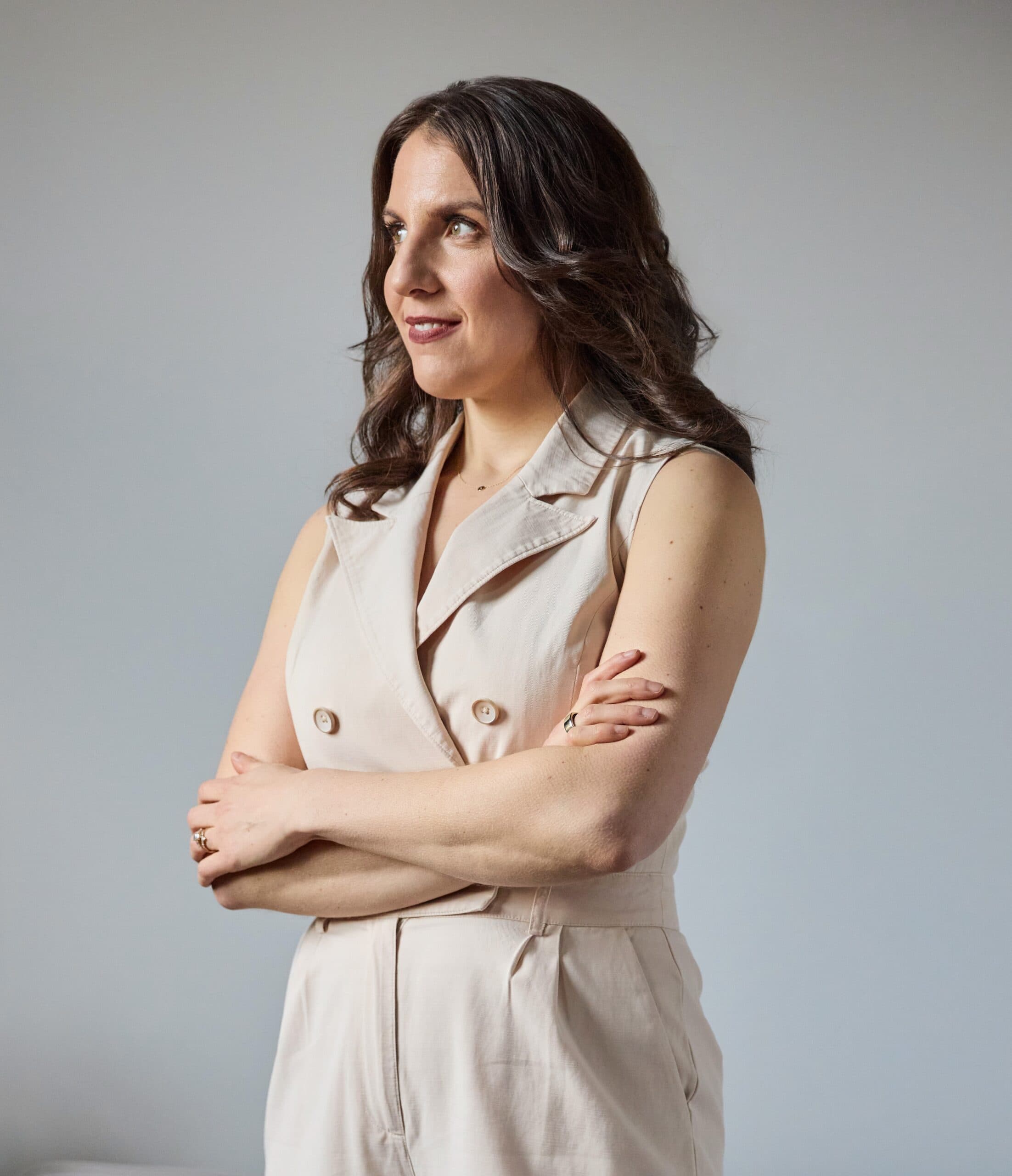
Claude Silver is on a mission to bring more heart and humanity to the way we lead and work. As the world’s first Chief Heart Officer at VaynerX, she partners with Chairman and CEO Gary Vaynerchuk to build workplaces where people come alive—safe to speak up, proud to belong, and driven by real connection. Claude has earned Campaign Female Frontier and AdWeek’s Changing the Game awards, and energizes audiences at global events including Meta, Google, U.S. government agencies, and the armed forces. She’s been featured in the New York Times, Forbes, the Wall Street Journal, and dozens of podcasts. Claude leads with heart, coaches with fire, and shows people how to show up.
Melody Wilding: I’ve shared before how the phrase be your authentic self at work makes me cringe a little, and I know I am not alone in that reaction. I think much of it comes down to the fact that be authentic. It’s this buzzword that gets thrown around with zero substance. It’s meant as this feel good phrase, but it’s often so vague that it’s actually just useless.
Or on the other extreme, it becomes this club to shame people with for having boundaries. People say, oh, you’re not comfortable sharing your entire professional life with your team. I guess you’re just not authentic. And we can’t ignore the fact that we live in a time where most of us are constantly posturing at work.
We’re curating how we show up. We’re managing perception. We’re proving ourselves over and over, especially if we’re trying to advance or get taken more seriously at senior levels. The idea of just being yourself, it can feel a little bit naive when the stakes are high. All of this is why I am excited to have Claude Silver on the show today to discuss her new book.
Be Yourself At Work, the groundbreaking power of showing up, standing out, and leading from the heart. Claude has spent years as the chief Heart Officer at VaynerMedia, which is founded by Gary Vaynerchuk. She has worked with thousands of their employees on bringing their whole selves to work in a way that serves them and the organization.
This is not some Pollyanna. Just be positive and everything will be wonderful. This is a grounded, practical approach, and she gets honest about the difference between being your true self and just being irresponsibly, unfiltered. One thing I’ve learned from Claude is that the real question to ask yourself is not, should I be myself at work?
Is that safe to do? The real question is, how do I show up in a way that feels true to who I am and effective in getting me where I want to go? With that, let’s get into my conversation with Claude.
Claude, it is such a special treat to have you on the show to be talking about your book. I could not be more thrilled for you the success it has already had. It’s just been out in the world two weeks at the time we are recording this. And it has been a huge hit so far. I wanna start by talking about the journey to even getting to the point of writing this book.
You were saying, I am so relieved. It is out there in the world. It is out of me. And I can remember when writing a book, and this book in particular was just a tiny little seed of an idea, was this intuitive hit and nudge and desire you have. So, tell us about that journey to getting to this point, because you know, as a fellow author, I understand there’s a lot of doubt, there’s a lot of imposter syndrome along the way, but I think people would appreciate to hear what goes on behind the scenes of someone who is so successful getting to this point.
Claude Silver: Thank you so much. Thanks for having me, and it is really wonderful to see you, especially because you played a pivotal role, maybe not knowing it in my life, in this journey, years and years ago before I put pen to papers. So I wanna thank you for that, being my coach for, for that time. And, yeah, you’re right.
I really did battle with some imposter syndrome. And one of the things that you and I spoke about back in the day, maybe eight years ago, nine years ago, was really finding evidence. It was a very big part of, the conversations that you and I had in terms of the coaching conversations and helping me through some limiting beliefs. And when I would find myself up against a wall,
I have nothing new to say, no one needs to hear from me. It’s already out there. It would stop me for, you know, a week, a month. But I would come back to the exercise of what is the evidence that I have nothing to say or what is the evidence that I might have something new to say in my own words. So yes, I definitely had those moments of, what am I doing?
This challenge is way too big. Huge job, family, two girls now. you know, so a life. And, very important for me to be accountable to the commitment I made to myself, that I would write a book. I would start it, I would complete it. And so when, actually, when I handed in the final manuscript, January 7th, 2025, I was happy.
If that was it, I would’ve been so happy. The fact that it was purchased by Harper. Great. And the fact that it’s now in hard back is even better. So all of these little kind of like these micro moments after the big delivery. Have really, filled me up, I will say, filled me up and, and also added to more anxiety of, okay, now.
Okay, now, okay, now. but yeah, I really just want to thank you. It was the first time I’ve seen you in a long time for helping me through, my imposter syndrome back in the day. And I know that was obviously a big topic for you. So I’m glad we found each other when we found each other.
Melody Wilding: Well, I, it means more than you know, to hear that, and when, when I saw you announce the book, I literally cheered out loud and was like, yes, it is finally happening. Because if there’s any one who was meant to write a book about all the wisdom and the experiences they have to share. It is you.
And there’s actually one thing from our conversations I really remember and it stuck with me too. ’cause I, I have to give this reminder to myself often, which is there’s someone out there who needs exactly what you have to say, they need to hear it now. And by letting the fear control us and hold us back, we are depriving that person from the thing they so desperately need.
And so I love hearing this, that yes, it was a commitment to yourself and you define success on your own terms. It wasn’t necessarily I wanna hit the best sellers list or it, it wasn’t this out there thing, it was this, I will be proud if I get this draft over the finish line. Which is something that was totally within your control.
And so tho those two things stood out to me. I’m wondering if yeah, if that came up at all for you.
Claude Silver: I’m so glad you actually just reminded me of that. I, this is so funny. Actually, have a bulletin board upstairs and I have that and the evidence part that you shared with me written down on sticky notes, like, I’m so glad you just mentioned that. The via, I have chills just thinking about that. Yeah, you, you did something for me which I didn’t know was any, was something that someone could do. You gave me permission. And I think I knew the permission inside, but of course, we grapple with our inner dialogue and our, our negative talk track up here in Imposter. And so because I was working with you, it wasn’t like I just met you at Starbucks.
It wasn’t like, I see you, you know, every now and then in the hallway. We had a coaching relationship. that, that gave me permission. Just like when you said, well, what is the evidence that you can or cannot do this, gave me permission to say, oh, yeah, wait. There’s a double click in here that I, that I’m allowed to do. It doesn’t matter what the world thinks, I’m allowed to do it. So I, I really appreciate what you said because this book, wrote it because it was a challenge for Claude. I didn’t write it for Claude. I wrote it for the world, so when you say there’s someone out there that needs to hear your voice right now, that’s exactly what I’m talking about.
I wrote it for the outside world and, and hopefully it will help to facilitate change in our workplaces and, and change in, in how we show up on a day to day, whether or not we are, a barista at, a coffee shop, or we are a CFO at, at a, Fortune 500. So thank you.
Melody Wilding: You have been blazing a trail in your role for a very, very long time. You have a job that I don’t think anybody any other human on earth has, which you are Chief Heart Officer for VaynerMedia, and that that role is so special. It is so suited to you and who you are. But tell us about how this job, working the being in this role, seeing everything you have seen, how did that lead to this book in particular and this topic of being yourself at work?
Claude Silver: Yes. Yeah. I mean, I’ll say when I’m asked why did I write the book, it starts years and years and years before I came to Vayner and was Chief Heart Officer. And I’ll get into that. However, as Chief Heart Officer and, and you know, the way Gary and I created this role, just to give everyone a little backdrop, is, I had been a strategist for a long time in, big holding company agencies, creative advertising agencies.
I met Gary, moved to New York. I was probably one of the three oldest people at the time. I had life experience and I had agency experience, so I was already kind of seen as an elder, if you will. And I was running our largest account of, of business. And it dawned on me that I was actually kind of shrinking and losing parts of myself. Because it was a role that wasn’t satisfying me inside. I could do it. I could do it with my eyes closed, but it wasn’t like, it just doesn’t matter to me how we get this in your hands, what color a product is, how do we wanna talk about the font? And there are lovely people out there and very smart that can do this well. It just didn’t fill me up anymore. And so when I said to Gary, thank you so much. You’re the greatest. I love this place. I don’t wanna do advertising anymore. He said, okay, well, what do you wanna do? And I said, I only care about the people here. I care about the heartbeat. And so after much conversation and finding my backfill, I resigned. And then he called me back, for breakfast three, three months later and he sat down and he said, that’s it. You’re gonna be chief Heart officer. And it really was that quick of an, of a conversation because he and I already had a strong connection. He understood who I was and, and the energy that I bring. And so, yeah. Oh, sure. It’s the greatest title in rock and roll. And it, it fits, it felt right. You know what I mean? It wasn’t like Chief Angel Officer or Chief Motivation Officer. Those things wouldn’t fit right for me. And so, immediately I had to figure out, you know, how, how I was gonna scale. How I was gonna scale empathy. And, and my only job description to this day continues to be you’ll touch every single human being and infuse the agencies with empathy. So we were 400, then we’re 2000 global and tons of countries where, you know, I don’t speak the language. I’ve never visited. that’s the chief heart officer role. Now, what very apparent to me as I was in this role. And I’ve been doing this now for, I’ve been at Vayner 11 and a half years, so I’ve been doing this almost 10 and a half years. it was apparent to me that I saw people really struggling to hustle. They thought, well, they’re working for the world’s greatest hustler, Gary, biggest salesperson, entrepreneur. If I wanna get ahead at 23, I be, I better hustle and work 18 hours. More and more people that came in to tell me that, and they’re mostly young men, it made me think, wow, these people are really suffering in silence here.
They’re really feeling as though they have to mask real them to be this facade of who they think Gary wants them to be, how they can succeed, and that’s not it at all. That wasn’t it at all. Gary chooses to do Gary. That’s his choice. Claude chooses to do Claude. Jack can choose to do Jack. So I remember going to Gary about eight years ago and saying, I, I think the word hustle is actually damaging now. We removed it from any kind of propaganda we had on the wall. And, and it’s not something I’ve heard him say since, within our four walls. You might say it on social, but that’s Gary V, the brand, not Gary Vaynerchuk. So, I am just because I’m an empath and I can feel things and, and watch I, I learn by observing and watching for patterns.
It’s just clear when you see people really shrink and when you see people right in front of you, decide to swallow their words or cut someone off and interrupt them five times in a conversation or all of those things that we as humans just do because we’re a bit messy. You know, we we’re trying, or no one has ill intent. You just wanna get your idea out there. So you just like disregard listening to that person and speak. ’cause you wanna get heard and you wanna get noticed and recognized. So where a lot of this came from. Also, I think, being around leaders and, and having had leaders in my life that really, I thought left a, a mess in many ways rather than like leaving a map for someone, which is such a loving thing to do, they would kind of leave a just a trail of broken promises and and accountability and whatnot. So really that’s what, that’s what everything kind of lined up for me at Vayner very, very early on when I, you know, was talking to you about writing a book. I truly believe there are other ways to show up. And there are the ways to show up, which are gonna be much more empowering and quite frankly, you know, make you, I think, a happier person, if you choose to show up with yourself rather than some mask of what you think you know, the boss wants you to be.
Melody Wilding: Amazing story. And yes, for anyone who hasn’t followed Gary V., I just actually passed Wine library. I was driving home
up, up that way and passed wine library and thought of you in this conversation we were gonna be having. And you know, you, you, you talked about people coming into your office and saying, well, I’m, I’m trying to live up to that expectation essentially.
And that made me think that a lot of us, might say, oh yeah, I want to be myself at work. We may just throw that out there as a term. But we don’t even know what that means to be ourselves, because we have spent our entire lives just comparing ourselves to other people and thinking about how do I fit in here and how do I live up to the leader or the peers I have around me and, we don’t even know who we are. So where, where do you even start? Especially those of us, like you and me, the more sensitive types we’ve been, the lifelong people pleasers. We’re very perceptive of others to the point where we become a chameleon. that follows us into our careers where we are just on this autopilot of behaving or pursuing things that we see around us or we think we should do.
When you were that type of person, where do you even start with figuring out what does it mean to be myself at work?
Claude Silver: Yeah, it’s a journey of self-awareness and that journey will start for some people at their last breath. That journey will start for some people at 13. It will kickstart again at 29. Whatever, you know, I think, that is a journey that only we can take for ourselves and only we have the choice to take for ourselves whether or not you’re taking it because you’re in crisis and you’re, you’re doing a timeout for yourself ’cause you’ve hit bottom somewhere.
Or say, you know what? I know that I have a part in making myself unhappy here. So what is my part in that? You take accountability and kind of point thumbs at yourself rather than fingers at the culture at large. And so the first thing to do, I think, is really understand what not being yourself doing for you. When you decide at nine o’clock in the morning to open up your laptop and all of a sudden put all of your self away for the day, is that causing you? Is that a gift to you maybe? Or does it, does it weigh you down? Most likely it weighs you down a little bit more, right? And so let’s talk about that first, and then let’s really figure out what it is to be you.
What is your journey? So what are your triggers? Are you aware of it? When someone cuts you off in traffic, what do you. Are you a screamer? Are you a rager? Do you honk the horn? Or do you just kind of like find that stillness inside? These are all self-awareness tips and tricks. You know, when when you’re in the elevator, are you someone that just looks at your phone or look down, or do you look up and say hi, all kinds of stuff, and what are your values? Why do people want you on the team? These are all things that are up to you to really figure out with a coach, a therapist, a friend, a journal, it doesn’t matter, but it’s our birthright to figure this out. And then of course, okay, I know my triggers are X and I know I get really, really happy and and excited at work when this happens.
Why? How do I regulate that emotion? It’s great that I get excited, but I might not wanna spill that everywhere because people are working and maybe I got the raise and they didn’t. And also my triggers when someone interrupts me or I get terrible feedback are really gonna cause me to get depressed. And then I’m gonna go sit in my team pod and I’m just gonna be, you know, cynical all day. So like, these are the things you wanna really find out about yourself within the context of life, of course, but we’re talking about work because that’s where we spend inordinately, incredible amount of time.
And so what better place to figure this out than in your work, your workplaces?
Melody Wilding: What I love about this is, is that what you’re suggesting is this is a gradual discovery and unfolding. This isn’t necessarily you sit down. Sit down with a journal, that’s great, but typically this is not like one one hour journaling session and then ta-da. I have found who I am supposed to be at work and in my life, like you were saying, it’s this almost meta awareness of, oh, why did I do that? Why did this bother me? What don’t I like about that leader? Or what do I really admire in that person? What does that tell me about my values? And it’s like these little breadcrumbs, you start piecing together into a bigger picture of who you are, what you stand for, what you want to move towards or away from.
So I appreciate that. ’cause I think a lot of people put so much pressure on themselves to have it all tied up in a nice little bow. Like over the holidays, I’m gonna sit down with my journal and really figure out what I want in the next year, and that can be alluring, but it’s not always realistic how it happens.
Yeah.
Claude Silver: Not always realistic, and then it becomes something that you end up letting yourself down on, most likely because it’s a marathon, and that marathon will take us all our entire lives to achieve, most likely, if we are starting the journey today, or for me, I’ve been doing the self-awareness journey for, for many, many years. There’s a lot more for me to discover about myself. A lot more. I just chose to start the journey because I was in pain much earlier in my life and I didn’t like the direction I was headed in. I said, all right, let’s stop this train. And via therapy is where I really started to uncover who I was and start very slowly start to embrace the, the gifts I have and start to really be okay with the challenges that I have faced and not. Cause myself any more shame really letting go of shame is, is the game here. I mean not to, not to be coy, but think if I had a magic wand, I would sprinkle that everywhere so that people could really be able to identify and release their shame much faster.
Melody Wilding: Okay, you were mentioning something I wanna talk about, which is you were talking about triggers and some of your own experience about navigating pain and challenges in your life. I wanna come back to that part, but you say something very early on in the book that I wanna dig into, which is you say, I think of life and leadership as an emotional path.
A cycle of showing up first with emotional optimism, then with emotional bravery, and finally with emotional efficiency. So you say emotional optimism, emotional bravery, emotional efficiency, break down those pillars for us. How does this connect to showing up at as yourself at work?
Claude Silver: So the optimism part is the hope, the belief, the faith, the knowing, the knowledge that you are in charge of you and you have agency to see a situation in any particular way you want. What I’m asking you to do is even if it is an emotional situation and it has caused you anger, upset, happiness, joy, okay.
That’s the emotion. You are not the emotion that is literally just your signpost. As Dr. Susan David says. Optimism is giving yourself a chance. Giving yourself possibility in room to maybe just reframe what has gone on in a way that it is not as heavy and overload and overbearing for you. So optimism is really like the I self optimism is I believe in myself and I want, I want better for myself. And I can do that, or I can work with some support systems to do that for myself. Tomorrow, the sun will shine.
The bravery is, with all of that said, all of the knowledge that you have then taking action. Moving forward, going back to your boss and saying, you know what I, I appreciate the time you spent to walk me through my feedback review yesterday. However, I do need to tell you I disagree with two of those points. You know, you might be shaking when you’re saying that, but you have every right to stick up and advocate for yourself if you feel like that was incorrect.
Taking action, going and saying to your boss, I’ve been here for three years without a raise. I’d like to talk to you about what that looks like. Those, those are taking action. Asking someone out on a date. That’s taking action. The more you do these things, the more you see yourself someone that can see growth or possibility, then, taking those actions, it speeds everything up.
Eventually, you won’t get caught in the drama of it all. Oh my gosh, I got an, I got a bad review and they, they’re gonna fire me. And all of that stuff that we just tell ourselves immediately. Which by the way, just shrinks us, causes so much anxiety and just who wants to go to work when you think about that, right?
So the efficiency is the name of the game really, which is getting faster at working through these things with yourself. Then I talk about it on a team and then obviously in a culture, what we really wanna do. We need to make culture change that is going to be inclusive of everyone.
The reason I put emotional in front of these things is because we are emotional creatures. And we’re not gonna escape that no matter how many walls we put up, still feelers inside, even though you might not be able to see my feelings. Right. You know that I have them because I’m a human. Those three things together, which I call the three E’s, are really just a, a flywheel to go faster and get through things so that you can achieve more, you can go after different options or opportunities. You don’t have to just sit there over and over chasing your tail with the same story in your head.
Melody Wilding: I wanna double click on that for a second because you, you said the word shame, which is a very loaded word. And I think unfortunately, a lot of people deal with shame. Not even recognizing that’s what it is, and it follows them from past experiences, whether they were in a workplace before, they had a really difficult manager that knocked out their confidence, they feel like they have made some mistakes or wrong turns in their career that they’re still beating themselves up over. And you were alluding to the fact that you’ve had some, you’ve had challenges in your life and a lot of this journey for you began with getting out of that pain that you were in.
Could you unpack that just a little bit, however much, however comfortable you are doing that. But I would really love to hear w was there something in particular that has shifted your mindset from that is me, everything is happening to me to more of this emotional optimism, bravery, and efficiency.
’cause that it’s not just a that you just flip one day. So I would love to hear what, what, what worked for you the most?
Claude Silver: Yeah. Right. It’s not one and
It’s a journey. I didn’t realize how much shame I was carrying as an adolescent until I left adolescent, saw some patterns that were reoccurring. I was doing the same thing over and over. Insanity is doing the same thing over and over thinking you’ll get a different result.
That was me. Whether or not it was in relationship work with my family. And what I realized is I was carrying a lot of shame and negativity about what is called intelligence. And because I am a different learner,I study things and people in probably a different way. I don’t, I’m not a textbook girl. I’m highly dyslexic, and so I really learned the world differently.
To me, that’s a massive superpower today. But as a 16, 19-year-old, 25-year-old, that was not a superpower. That was ugly. That was a scarlet letter for me. I thought I was dumb. And that is what I told myself over and over and over. And I actually still told myself some of that when we met. It’s something I have to be very conscious of and present of that that will seep in. That is my Achilles heel. I am dumb. And that’s where you help me find the evidence of, but am I, right? Not really.
So things like that, you know, because I thought I was dumb because I, I, I felt as though I didn’t belong in school. I, I come from a very educated family. I felt like I had a missing chip. My parents, who I talk about in the book, who are incredible and loving, you know, said to me over and over and over again, you think too much with your heart, Claude. When are you gonna learn how to think with your head? I interpreted that not as them trying to protect me. I interpreted that as I’m flawed. I think too much with my heart, not enough with my head. And then what does that, well, Claude, you’re dumb. So you’re not gonna think with your head. On and on and on and on.
And so what that, those limiting beliefs did is they kept me from opportunities in my twenties. They kept me going into similar relationships over and over and over trying to heal something or someone not recognizing it was me. I, I’m the only person that can heal me, but I was the one that really needed to take the time. And so that’s what, that’s really the pain I was in of like, I became codependent. I became a people pleaser. I lost a sense of self because I didn’t like myself. It’s very, why would I like something that seems flawed it, that, that doesn’t rationally make sense?
And so I had a very big. I was carrying a very big scarlet letter, that just seemed to collect dirt everywhere I went because that was the mirror I put up. And so flies are gonna come right to that mirror ’cause it’s light and bright and, and so I had to do a lot of hard work to unwind of those negative voices in my head understand that some are still gonna be there.
They are like little pets that like to come and just poke me every now and then. But for the majority of time, they’re gone. They’re gone. I have a, a, a lot more confidence In the the heart prints and the fingerprints I put on this earth and understanding why I’m here. That’s something I really wanna provide and continue to provide other people. Because I’m not the only person in the world that has gone through this.
We know that.
Melody Wilding: Yeah. And being able to name that narrative and now catch it when it comes up like, oh, there it is again. Right. This is not, then you have choice and agency. That’s the emotional efficiency part is to say, there it again. Now I can make a quicker choice about do I wanna buy into this or not? And yes, what’s the other belief want, to choose to find evidence for. Fantastic.
Claude, the last question I wanna ask you is, someone may be listening to this and think, I wish I worked for Claude. I wish I had a leader like Gary who said, hey, come back and we’ll make this role for you. And someone may be listening and think, that’s not the situation I’m in. I’m unfortunately in a place where it’s supportive of me being myself at work. And I’m just curious what, what advice or guidance might you have for someone who feels like they’re in that situation where they can’t fully show up as themselves in their current role? choice to leave and find somewhere different, or is there something else they should be considering?
Claude Silver: I, yes, I think there’s a, a handful of options there. One is definitely if you feel in your heart of hearts this place isn’t gonna change, and I’m, I’m just stuck, then by all means, take it upon yourself to find another job. Take it upon yourself to really investigate and interview different companies and places, and find out about their culture.
However, I’ve been at many, many jobs that I didn’t have a Gary and I was always me. That unofficial mentor, a team leader, that team builder, and there were book clubs that I started. With others, you know, just to have, we, we created a community within a community. Within a community. there were bake sales that we did.
There were, food drives that we did. I’m just thinking of all the different companies I’ve been at where it was like, I have to stay here ’cause I need this job. I need a job. I’m already here. know, it’s dot com bust number 95, and I’m not gonna get a job if I leave when I lived in San Francisco. And so, how am I gonna, how, how am I gonna make this sustainable for me?
And I know that there’s other people who will, who are like me, that want to come, come on the ride. There was one time actually that I went to our CFO. This is 2006 actually. I went to our CFO and I asked if we could have some funds to, create this book club and to buy books and to bring speakers in.
And he said, no. And so what I chose to do with others, not just Claude, was create a very qual survey with all of the people that had their hands raised to be in this book club of where their level of satisfaction was. You call that employee engagement, happiness, it doesn’t matter. Then in nine months, we took the survey again. And it had gone up by 30, 33%. I went to the CFO myself and another person, and they gave us $6,000. That was great because $6,000 was a lot to buy books and bring people in. So there are tons of things you can do with your own creativity to m make the place work for you. I truly believe, like Brene Brown says, true belonging doesn’t mean you need to change who you are. It means you need to be who you are. I, I believe that in my core, and I recognize that not everyone is in a place for a number of reasons, where they feel like they can be themselves. And so again, I go back to micro movements. Small movements here and there. Try it, dip your toe in the water. Maybe be vulnerable with your boss next time. And if I’m speaking to any leaders out there, that is our job is to show more of ourself and to let people into our journey so that it doesn’t seem like we are invincible with a C-Suite title. That’s not the way this goes. It’s just not.
Melody Wilding: I love that reminder because I. And you being real about that. I, it bothers me sometimes when I’ll get comments on LinkedIn or Instagram where people say, well, if you have a difficult boss,
just leave. And that’s not, that’s not possible for, for most people. And what I hear you saying is belonging is a core need, we need to satisfy. Find pockets or small opportunities, whether it’s with a colleague, like you said, it’s, it’s experimenting and kind of floating a more vulnerable, vulnerable question with your boss. Maybe even if your workplace feels completely unsafe, then yes, it’s a sign you gotta go. But in the meantime, find another community volunteer at a food pantry or find an online community where you can find that because you, you need that recognition. Like you said, you can be yourself. There may be, unfortunately, people may have things to say about that. And then you’re faced with a decision about, okay, is this a place where I can or do I need to look differently?
But I love that message about the micro opportunities. So, Claude, where can people find you? Where should they get the book and connect with you further?
Claude Silver: Oh, amazing. Thank you. I’m on very vocal on LinkedIn. You can also go to my website, claude silver.com and and you can buy the book there. You can buy the book at,BeYourselfbook.com as well. And, yeah, I hope everyone writes me. I love hearing what’s going on with people and, and offering anything I possibly can to let people know, like they’re gonna be okay. It’s, you got this, I believe in you and I don’t even know you, but I believe in you.
Melody Wilding: Thank you for being who you are and being willing to put yourself out there, and for sharing that with all of us today is such a gift and I am just so, so happy for you and, and proud of you. So thank you.
Claude Silver: Thank you very much thank you for everything.
You’ve got the brains (obviously). You’ve got skills (in spades). Now let’s get you the confidence and influence to match.
